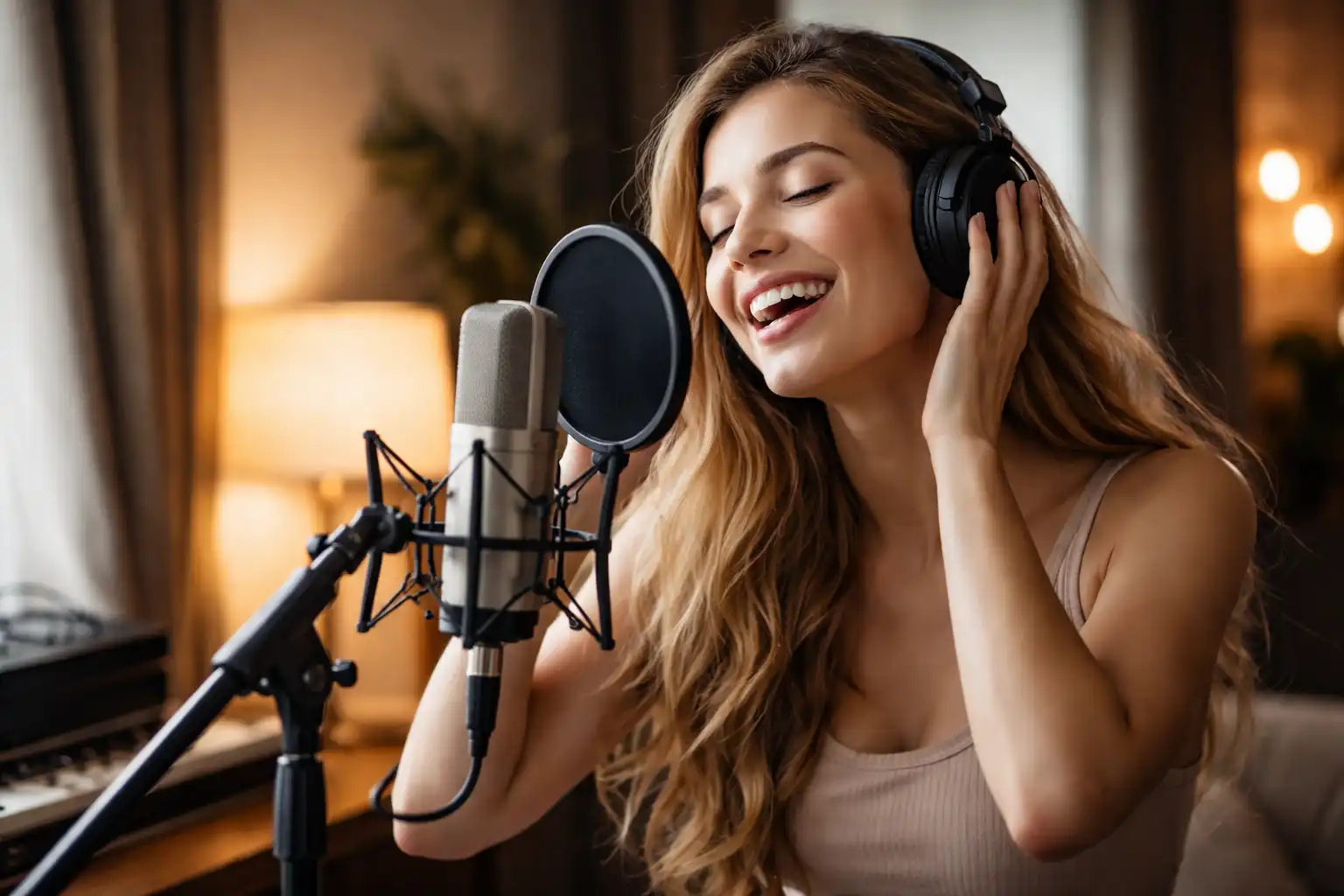
Home recording of vocals once seemed like a compromise, but now it is a breakthrough technology. Using proper setup and technique you can record vocals at home that are polished, expressive, and ready for release. At Joann C Chang Studios, vocalists are gaining the confidence to record vocals at home without the need for costly studio time. No matter if it is demos, covers, worship tracks, or original songs, knowing how to record vocals in a proper way will make a huge difference in the quality of sound and also increase one’s self-esteem. Vocal recording at home does not require expensive equipment but it does require getting to know one’s voice, the recording setup, and getting good, lively takes every time.
Understanding Vocal Recording at Home
Vocal recording at home is the process of getting your voice in a crystal-clear way while still keeping its natural tone and emotions. Recording, as opposed to a live performance, makes the details of the voice very apparent thus making preparation and setup very important. The first step in learning how to record vocals is knowing how to blend performance, environment, and equipment together. To record vocals at home, you have to control three factors: your singing technique, the place you are recording, and the tools you are using. When these three factors come together, the quality of the vocal recording at home can be as good as that of studio.
For singers, understanding audio recording for singers means recognizing that performance and sound quality are inseparable. A well-sung take recorded poorly still falls flat.
Essential Equipment for Home Vocal Recording
You don’t need an expensive studio to record professional vocals at home. The only thing that matters is having the correct basic tools. The condenser microphone is commonly used, taking its clarity and sensitivity as the main reason. Clean digital audio without noise or distortion is guaranteed by using it along with a good audio interface for home recording.
Your microphone setup for vocals should also include:
- A pop filter to reduce harsh consonants
- Closed-back headphones to prevent bleed
- A stable mic stand to maintain consistent positioning
Together, these elements create a dependable foundation for vocal home production. This balance is what allows singers to record vocals at home without sacrificing tone or emotion.
Creating a Vocal-Friendly Recording Space
No one requires a deluxe, soundproof studio to record vocals at home. What actually is important is managing echo and noise from the environment. Easy solutions like drapes, carpets, or even a wardrobe filled with clothes can quickly elevate vocal recording at home, thereby making it less difficult to record vocals at home cleanly and consistently using minimum gear.
Proper microphone sensitivity adjustment is also crucial. Set your input level so louder notes don’t clip while softer phrases remain clear. This balance helps to record vocals at home and preserve dynamics without distortion.
Preparing Your Voice Before Recording
Knowing how to record vocals also means knowing when not to push your voice. Warm-ups are essential, especially during longer sessions. Hydration, posture, and breath control help prevent vocal strain while recording. Taking short breaks between takes keeps your tone consistent and reduces fatigue. This is especially important when recording higher or more demanding material.
Singers who already maintain structured vocal routines like those built through consistent How to practice singing habits often find recording sessions smoother and more efficient
Vocal Recording Techniques That Make a Difference
The major approach in strong vocal recording techniques is to be consistent rather than perfect. Instead of trying to record the “perfect” take in one go, record several takes and later select the best sections. Try to keep the same distance from the mic throughout the recording and have a relaxed posture. These tiny habits result in a significant difference in vocal recording at home.
Equally important are tips for confident vocal delivery. Visualizing your audience, standing while recording, and committing emotionally to the performance can significantly improve the final sound.
Choosing and Using Recording Software
Your recording software for vocals does not need to be advanced. The majority of the digital audio workstation (DAW) can provide you with all the necessary tools for clean recording, editing, and basic mixing.
Learn the basic functions and focus on them:
- Creating clean tracks
- Adjusting input levels
- Saving and organizing takes
Keeping your workflow simple helps you focus on singing rather than troubleshooting software issues, which is why many singers eventually explore deeper production skills through a Vocal production and recording masterclass.
Basic Vocal Mixing for Beginners
Mixing is not necessarily a complicated process. The basic mixing knowledge is the most essential thing to learning how to record vocals that will sound good in any place. Light EQ to get rid of muddiness, soft compression to make the level even, and a little reverb for the ambience are the basic ingredients for mixing. These tips for vocal mixing for beginners make the recordings sound natural and smooth. Remember, mixing enhances a good recording it doesn’t replace it. Clean input always produces better results than heavy editing.
Learning Faster Through Structured Guidance
Many singers improve faster when they learn alongside others. Without a doubt, singing together with others in Group singing classes every now and then fosters the development of confidence, timing, and performance awareness which consequently results in better recordings.
On the other hand, for those singers seeking more individualized critique, private singing lessons frequently expose certain technical tendencies that are not very noticeable until the microphone is switched on.
Bringing Professional Vocals Home with JoAnn C Chang Studios
Mastering how to record vocals like a pro will encourage vocalists to develop their creativity as well as their technical skills. At Joann C Chang Studios, the vocalists are not only trained in vocal technique but also in their performance, musicality, and production consciousness. Through expert coaching, flexible learning options, and a strong foundation in healthy singing, Joann C helps artists create recordings that reflect their true voice. When singers understand both technique and setup, they can confidently record vocals at home at a professional level.
FAQs
What equipment do I need to record vocals at home?
You need a microphone, audio interface, recording software, headphones, and a quiet space.
Do I need a soundproof room to record vocals?
No. A controlled, quiet environment with soft surfaces works well for vocal recording at home.
Is home recording cost-effective for singers?
Yes. Once set up, recording vocals at home saves studio costs and allows unlimited practice.
Are online courses useful for learning home recording?
Yes. Structured learning helps singers understand technique, software, and production workflows.
Which microphone is best for home vocal recording?
A quality condenser microphone is commonly used for clear, detailed vocals
