

What Nobody Actually Tells Beginners
Here is the honest truth about harmony: most singers kind of avoid it for too long because it sounds complicated. Then they actually try it, and they notice it clicks faster than expected, and it’s like, “Why did I wait so long?”
Learning how to harmonize vocals isn’t some weird “special ear” thing, and it’s not about years of music training either. It’s more like: you figure out what note to sing, train yourself to stay with it, and get enough repetitions so it turns into second nature. That’s really it, no big secret.
This guide covers harmony in singing explained clearly, how to find your notes, how to practice it properly, and what to do when you feel stuck.
So What Is Vocal Harmonization, Exactly?
Think of it like this. The melody is the main tune of a song; most people sing along to that part. Vocal harmonization is when a second voice ( or third ) steps in and sings a different note while the first one is going, and the second note actually fits because it’s coming out of the same key.
When both notes ring out together, the sound gets fuller, richer too. That’s what you hear in gospel groups, country duos, pop acts, and worship teams. The notes don’t really clash because they’re in the same musical family. They’re built to work together and stay on track.
Music Harmony Basics: Just The Parts That Actually Matter

You don’t need to understand all of music theory to sing harmony well. But you do need to know about intervals, specifically, the distance between your note and the melody note.
The four intervals that show up most in harmony:
- Thirds, your note sits two scale steps above or below the melody. This is the most common harmony interval in pop, gospel, and country. It sounds warm and sits close to the lead.
- Fourths, three steps above. Works well in folk and worship. Has a slightly more open sound.
- Fifths, four steps above. Bigger, fuller sound. You hear it a lot in choral and rock settings.
- Octaves, same note as the melody but higher or lower. Adds body without creating a new pitch relationship.
If you’re just starting, focus on thirds. They’re the most forgiving and the most natural to find by ear.
How To Find Harmony Notes Without Getting Lost
The biggest issue singers face when learning harmony is accidentally drifting back to the melody. You start on your note, hear the lead vocal, and somehow end up singing the same thing. It happens to almost everyone at first.
Here’s a method that actually helps. Pull up a piano app. Play the first note of the melody. Count two white keys up, that’s your third. Play it and sing it a few times by itself until it feels settled. Then play both notes together. If it sounds good, you’ve got harmony.
For singing harmonies for beginners, the key is anchoring to your note before trying to hold it next to someone else’s voice. Ear training for harmony singing is really just repetition of that anchoring process until your ear stops reaching for the melody automatically.
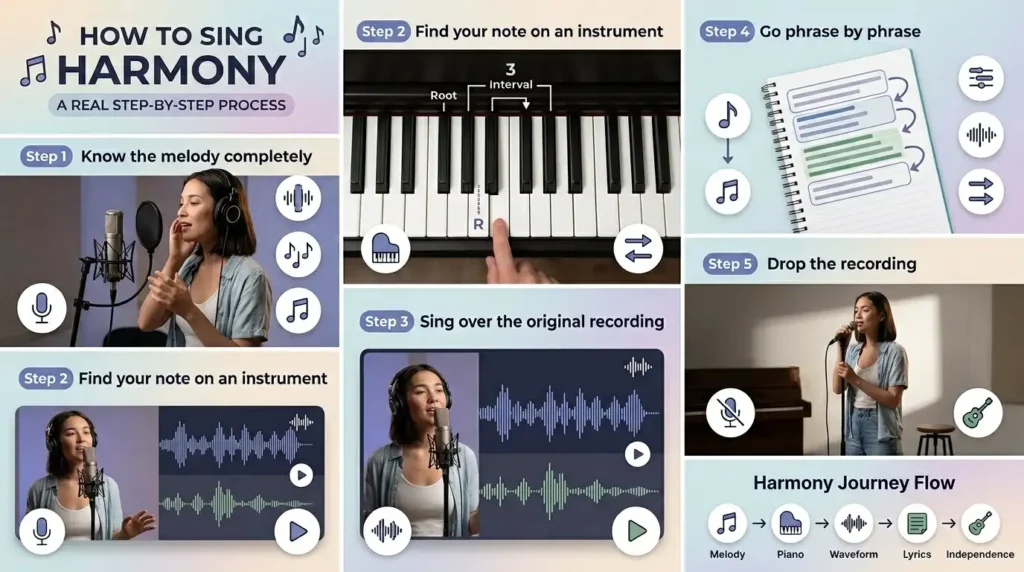
How To Sing Harmony: A Real Step-By-Step Process
Step 1: Know the melody completely. Sing it until you don’t have to think about it. This matters more than people realize. If part of your brain is still tracking the melody, you won’t have enough attention left to hold a different note.
Step 2: Find your note on an instrument. Take the opening note of the melody. Find the third above it. Sing that note on its own until it sticks.
Step 3: Put the original recording on and sing over it. Don’t tackle the whole song. Just the first line. Get used to how it feels when two voices are running at once, and yours is different.
Step 4: Go phrase by phrase. Harmony notes shift as the melody moves. Follow your line through the song one phrase at a time. Keep your ears on your part, not the lead singer’s.
Step 5: Drop the recording. Sing harmony with just a guitar chord or piano note underneath. This is where how to harmonize singing starts feeling natural instead of forced. Real independence only comes when the lead vocal isn’t there to anchor to.
Which Song Made Harmonize Famous?
Vocal harmony has been around for ages, but some artists made it kind of iconic for their own generation. You know, The Beach Boys in the 1960s. Boyz II Men in the 1990s. Pentatonix more recently. And each of them sort of turned that close, layered sound into the main moment, not just a small supporting thing in the back. The vibe shifts decade to decade, still, though, the core idea stays the very same.
How To Practice Harmoninzing (Without Burning Out)
Short, focused sessions beat long, unfocused ones. Here are a few harmony singing exercises that build the skill without making it feel like a chore:
- Use an ear training app daily, even 10 minutes of interval recognition work on apps like Functional Ear Trainer pays off over weeks.
- Learn harmony parts that already exist, and find the backup vocal line on a song you love. How to sing backup harmonies feels a lot less overwhelming when the notes are already written.
- Record yourself in layers, sing the melody into your phone, play it back, and sing harmony on top. You’ll know immediately if something’s off.
- Sing with other people regularly, nothing trains your ear faster than holding your part while someone else sings something different right next to you.
Harmony Singing Tips For Group Performances
Solo practice and group singing are genuinely different skills. The harmony singing tips for group performances that matter most are less about technique and more about awareness.
Your volume should sit below the lead; harmony supports, it doesn’t compete. Match vowel shapes with whoever is beside you. Breathe at the same spots. These seem like small things, but they’re what separates a tight blend from a muddy one. The best group harmony singers are usually the ones listening the hardest.
How To Mix Harmony Vocals In The Studio
Once you move into recording, mixing harmony vocals changes how your whole track lands. Pan harmony tracks slightly left and right while keeping the lead centered. That alone creates width. Roll low-end off below 200Hz on each harmony layer so the lead owns the fuller register. Push harmonies back slightly with reverb. And use volume automation so harmonies drop in verses and come up in choruses, that movement is what gives the mix its dynamic feel.
When You Need More Than A Guide
There’s a real gap between reading about vocal harmony techniques and actually singing harmony in tune while another voice plays beside you. That gap closes a lot faster with someone watching and correcting in real time.
A vocal coach in California who works on harmony specifically can spot exactly where your ear is pulling you back to the melody and fix it before it becomes a habit. That kind of feedback also makes learning how to harmonize vocals much less frustrating.
Why Singing With Others Changes Everything
You can get a lot done practicing alone. But the instincts that come from singing in a group, holding your note, listening to the blend, adjusting in real time, those only develop when you’re actually doing it with people.
Group singing classes give you that environment consistently. When the blend clicks and you feel it in the room, that’s what calibrates your ear in a way that no app or exercise can replicate.
The Bottom Line
Learning how to harmonize vocals take patience, but it is not really as hard as it looks from the outside. Start with thirds, don’t rush. Learn just one little phrase at a time, and if you can, record yourself often so you can tell what is actually going on. Try to be in a room with other singers whenever you get the chance too, even if it’s informal, because the whole “live listening” thing helps. Your ear can improve faster than most people assume, as long as the practice is regular and focused. Then once it finally clicks, harmony turns into one of the most enjoyable things you can do with your voice, seriously.
FAQs
Can I teach myself to harmonize?
Yes, and plenty of singers do. The main tools are a piano app for finding notes, a recording setup so you can hear yourself, and a lot of repetition. A coach speeds up the process significantly, but self-teaching works if you’re consistent and honest with yourself about what you’re hearing.
What are the basic rules of harmonization?
Your notes need to come from the same key as the melody. Thirds, fourths, and fifths are the most common intervals. The harmony should follow the rhythm of the melody in most cases. And the harmony vocal typically sits a little softer than the lead, it’s support, not competition.
How to harmonize vocals to any song?
Figure out the key first. Then find the third above each melody note using an instrument. Sing those notes while the song plays. Some will need a half-step adjustment to stay in key; that’s normal and expected. As your ear improves, you start hearing those adjustments automatically without needing to check the instrument each time.
How do you write vocal harmonies?
Record or notate the melody first. Find the scale the song is in. For each melody note, pick a harmony note from the same chord, usually a third or fifth above or below. Record each harmony phrase one at a time and listen back critically. Counter-harmonies that move in the opposite direction of the melody can be added once the main harmony line is locked in and sitting well.
