

The process of learning how to sing from your diaphragm represents an essential stage that develops your singing abilities through powerful vocal training. The Joann C. Chang Studios program teaches singers that vocal power arises from intentional control of airflow rather than pushing sound through the throat. Your tone becomes fuller and your stamina increases when you sing from diaphragm because your voice achieves stability through this practice.
Singers often use shallow breathing without realizing their dependence on this technique. They use shoulder elevation, along with neck tightening, to push sound through their mouths. Diaphragmatic singing requires singers to transform their efforts into breathing control, enabling their bodies to produce sound naturally.
Understanding the Diaphragm’s Role in Singing
The diaphragm is a dome-shaped muscle located underneath the lungs. The diaphragm operates its downward movement during proper inhalation, which enables complete lung expansion. The abdominal muscles extend outward from their central point as the rib cage moves naturally during this process. The diaphragm performs its upward release function to control exhaled air while you sing. The steady airflow creates necessary breath support for singing performance while the vocal cords produce sound through their vibrations. Balanced airflow maintains stability, which improves vocal resonance.
The throat receives tension when you fail to sing from diaphragm. The vocal folds experience strain over time, which leads to decreased tonal clarity. Diaphragmatic singing distributes effort throughout the respiratory system rather than isolating pressure in the neck.
Diaphragm Breathing for Singing: Building the Foundation
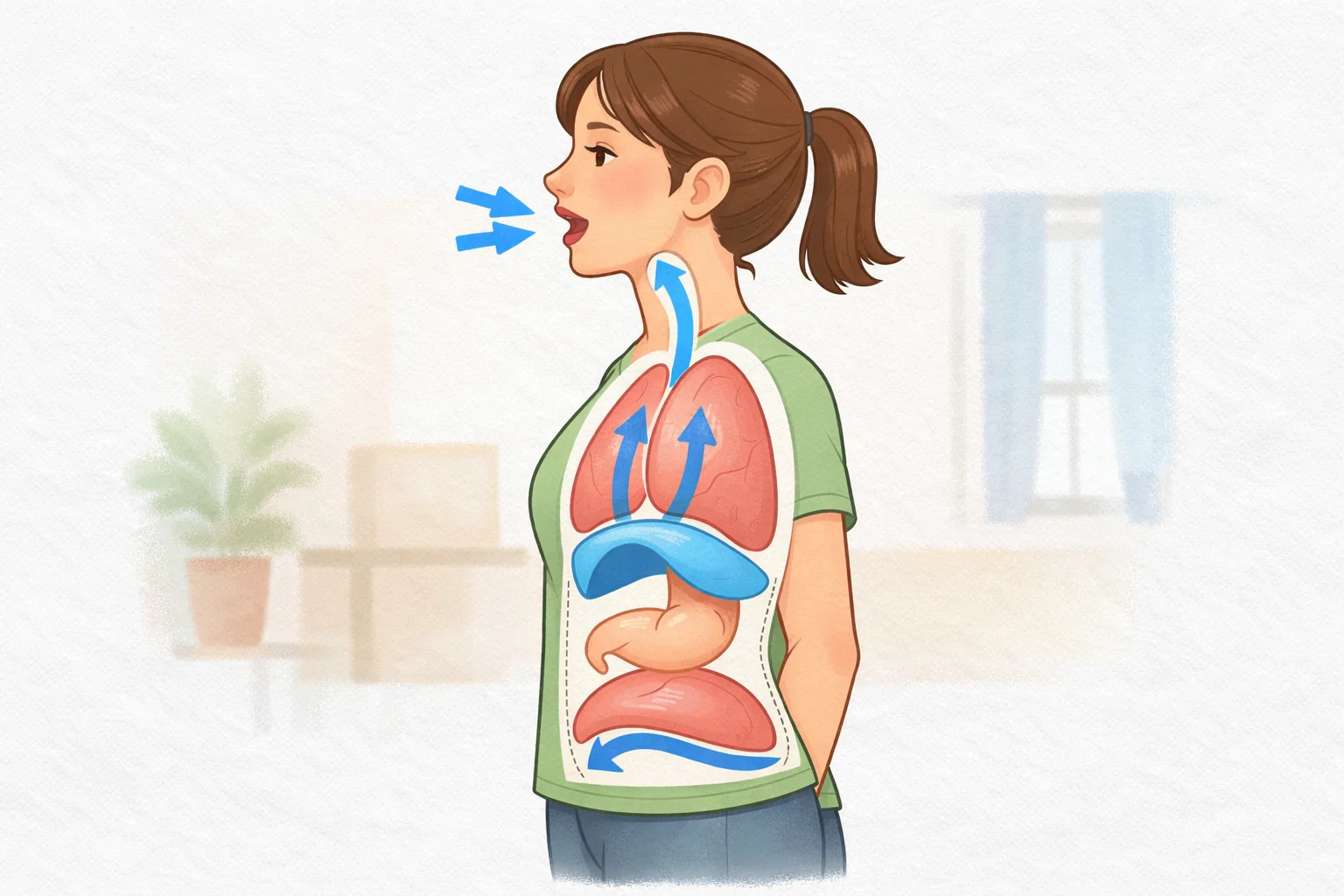
Proper diaphragm breathing for singing starts with correct body positioning. Standing upright with your shoulders loose and your body aligned enables free movement of your respiratory muscles. To learn how to breathe from the diaphragm, you should position one hand on your chest and another hand on your stomach. Begin the process by breathing in through your nose at a controlled pace. The lower hand moves away from your body when you perform diaphragmatic breathing while singing, but your chest stays in its original position.
On the exhale, release air steadily on a soft “sss” Sound. Maintain rib cage expansion and gentle abdominal engagement. This builds proper breathing technique for singing and strengthens your diaphragm singing technique so you can sing from diaphragm consistently in longer phrases.
How to Stop Singing From Your Throat
Your throat tightness and fatigue will cause your breathing coordination to become irregular. Decrease your singing volume and practice diaphragm breathing techniques again. You need to check your posture while you sing and make sure your abdominal muscles contract gently rather than forcefully.
When you sing from diaphragm, airflow becomes the primary driver of sound instead of throat pressure. The notes achieve better support because the vocal folds stay protected, which enhances vocal resonance. The early prevention of this habit enables singers to avoid future problems while they develop safe singing methods.
Applying Breath Support Across Your Vocal Range
When you sing from diaphragm, airflow remains stable across your range. In lower notes, often referred to as chest voice, grounded airflow keeps the tone rich without heaviness. Steady breath support prevents pushing and protects the vocal cords.
As pitch rises, airflow must stay consistent so the larynx does not lift unnecessarily. Diaphragmatic breathing for singing enables the vocal folds to function without external pressure by allowing their natural movement. The vocal technique produces better results when singers maintain continuous airflow, as it helps them control their sound production.
Developing Control in Higher Registers
As singers expand upward, airflow precision becomes essential. In what is commonly described as head voice, steady diaphragmatic breathing singing keeps tone supported without added tension.
When you consistently sing from diaphragm, higher notes become both lighter and more stable. The lungs release air in a controlled manner while the abdominal muscles create slight resistance. The singer uses this method to achieve vocal clarity, which also helps protect their larynx from excessive strain.
Creating Smooth Register Transitions
Blending registers requires steady airflow. In the coordination often described as mixed voice, diaphragmatic singing allows lower and higher vocal qualities to function together.
Singing requires diaphragmatic breathing because it helps singers establish better vocal control during their performance. The diaphragm function enables singers to achieve seamless vocal transitions that maintain vocal balance throughout their singing range, preventing strain and supporting consistent vocal resonance across dynamic changes.
Diaphragm Breathing Exercises to Strengthen Support
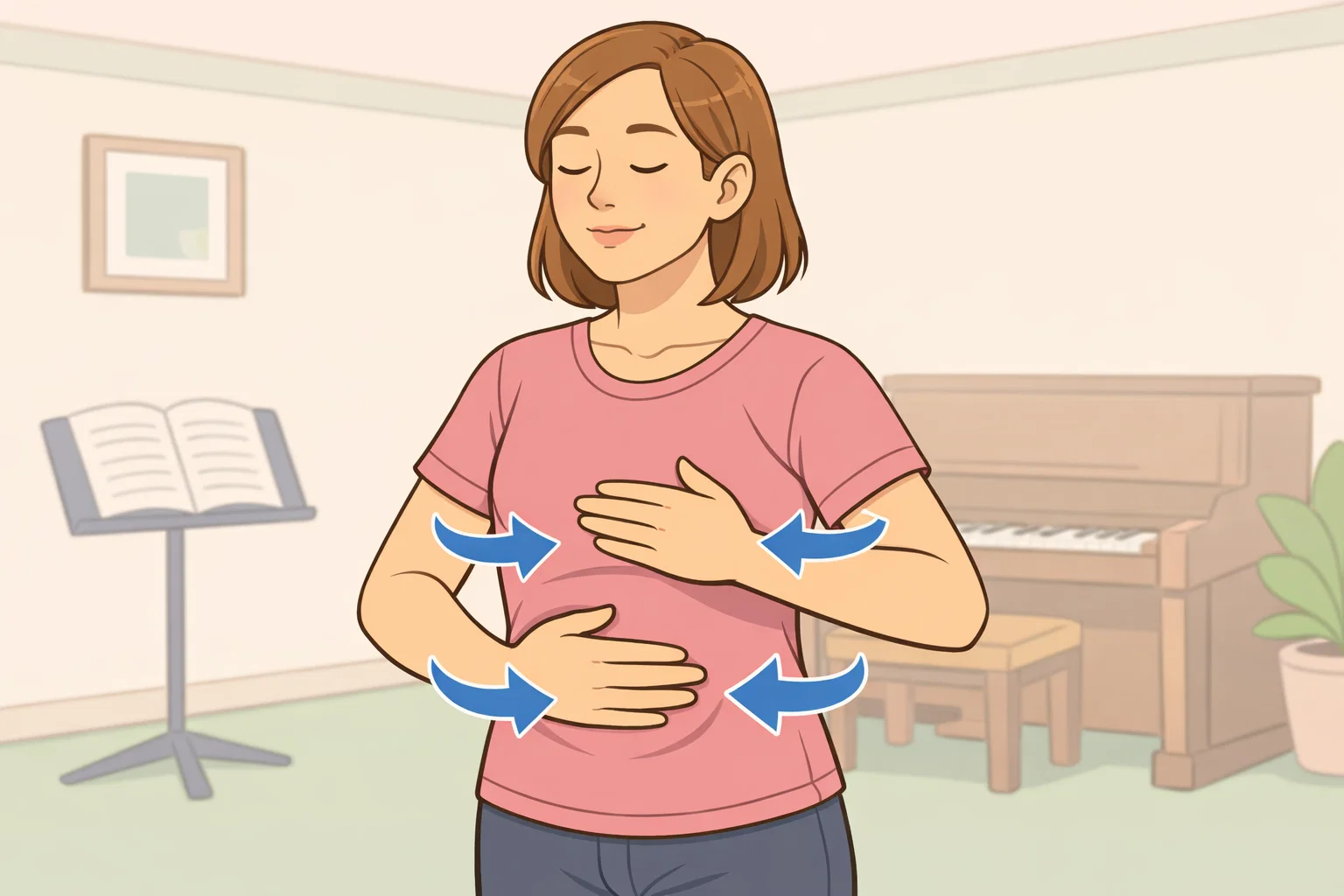
Targeted diaphragm breathing exercises help develop endurance capacity while establishing consistent breathing patterns. The practice also teaches correct techniques for controlling airflow.
- Controlled hissing: Inhale steadily, then release air on a sustained “sss” sound to strengthen gradual airflow release and maintain rib cage expansion.
- Lip trills: These encourage singing with breath support instead of throat tension by requiring steady, even airflow.
- Sustained vowels: Hold a comfortable pitch while focusing on even airflow to develop diaphragmatic breathing for singing and improve tone stability.
Singers who practice diaphragmatic singing techniques every day will find it easier to perform complete songs when they consistently sing from diaphragm while maintaining control of their vocal pitch.
Building Consistency Through Practice
The process of developing skills through practice requires multiple practice sessions. A structured plan for how to practice singing ensures diaphragmatic singing becomes automatic rather than forced. The session should begin with breathing drills, which lead into both scales and repertoire practice to reinforce steady airflow control. Private singing lessons provide guided instruction that helps singers improve their breath coordination and eliminate hidden tension patterns more efficiently.
Mastering How to Sing From Your Diaphragm for Long-Term Vocal Strength
Learning to sing from diaphragm develops three essential skills, which include endurance, stability, and control. The vocal folds are protected by steady airflow, which enables the diaphragm, lungs, and larynx to work together with maximum efficiency. Diaphragmatic singing improves tone and reduces strain while enhancing overall vocal resonance and confidence.
At Joann C. Chang Studios, singers develop breath support, enabling them to produce a voice that remains powerful and balanced throughout their singing careers for years to come with lasting vocal health.
FAQs
How do I know if I’m singing from my diaphragm?
Your abdomen expands during inhalation, your shoulders stay relaxed, and your throat feels free. Notes feel supported rather than forced.
How do you train yourself to sing from your diaphragm?
Practice diaphragm breathing exercises daily, apply steady airflow to scales, and gradually integrate diaphragmatic singing into songs.
How do I stop singing from my throat?
Lower volume, reset posture, and focus on diaphragmatic breathing singing before increasing intensity.
Is singing from the diaphragm difficult?
It may feel unfamiliar at first, but consistent practice makes Sing From Diaphragm natural and efficient.
how kids can sing from your diaphragm?
Through simple breathing games, humming exercises, and consistent reminders to expand the abdomen instead of lifting the shoulders.
How Does the Diaphragm Work During Singing?
The diaphragm contracts downward during inhalation to expand the lungs, then gradually relaxes upward to control airflow that powers vocal resonance.
