
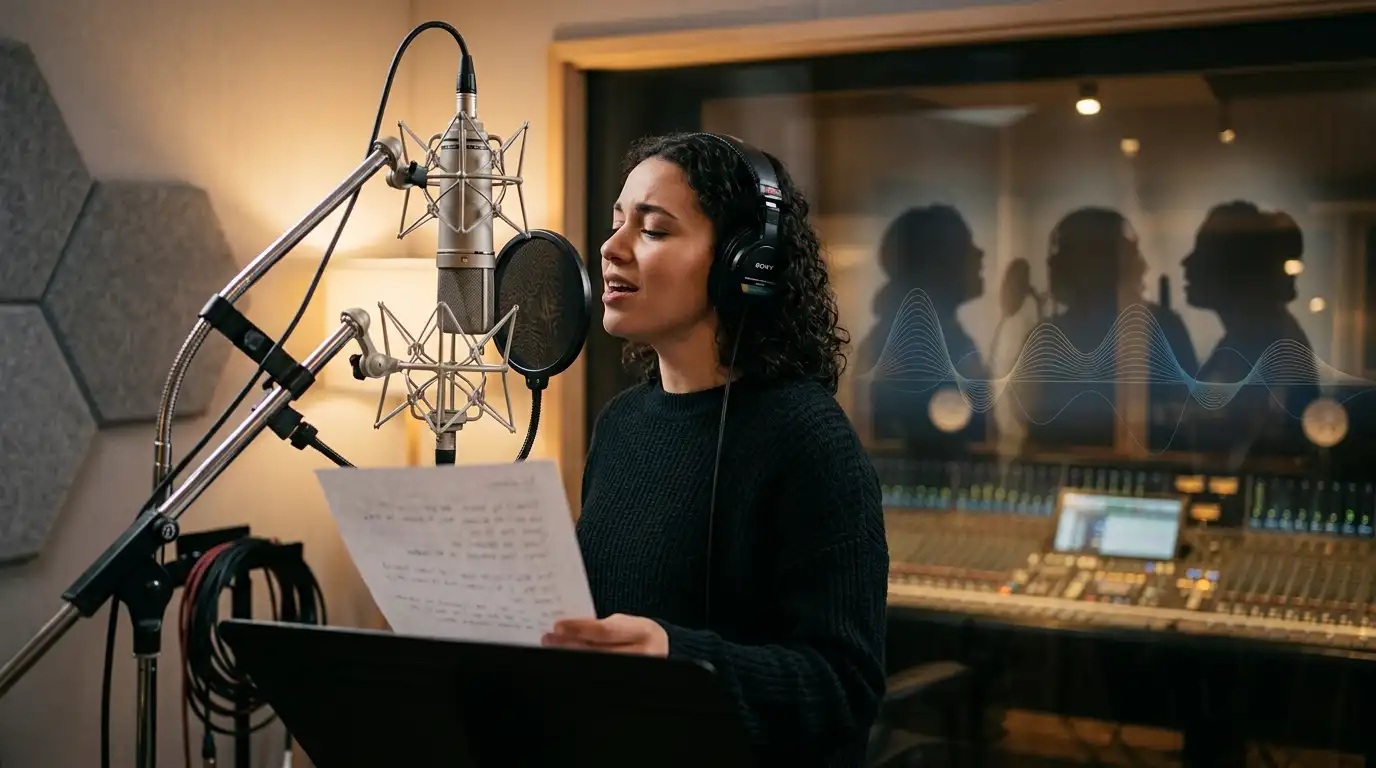
You have heard them a thousand times without noticing.
That warm layer underneath the lead in a gospel song. The tight stack behind a pop chorus. One voice doubling the melody an octave up on the bridge. Nobody points at it. Everyone feels it.
That is singing backing vocals. And it is one of the most underrated skills in music.
Nobody buys a ticket to hear the background vocals. But take them out of a recording and something feels hollow immediately, even if the listener cannot name what is missing. Invisible but completely necessary. That is the job.
This guide covers what backing vocals are, what they do, how to sing backing vocals correctly, and how to actually get better at them.
So What Are Backing Vocals?
Backing vocals are the vocal parts that sit behind or beside the lead vocalist.
Sometimes they double the lead melody exactly. Sometimes they sing harmony vocals a third or fifth away. Sometimes they just hold one note while the lead does something interesting above it. The role shifts from song to song and section to section.
What is the role of backing vocals in music? Honestly, just depth. One voice carries a melody fine. Add background vocals, and suddenly it feels bigger than one person. Hard to fully explain until you hear a song with them stripped out completely.
You hear them everywhere once you start listening. Tight three-part harmonies in Motown. Layered gospel stacks. The vocal layering in modern pop is where one singer records the same line four times and stacks the takes across a stereo field. All backing vocal work, just in different forms.
Lead vs Backing Vocals
The lead vocalist carries the main melody and gets expressive freedom with it. Timing, runs, interpretation. All of that belongs to the lead.
A backing vocalist serves the lead. Full stop. Your vowel shapes, your phrasing, your volume, all of it bends toward making the lead sound better. Supporting vocals that draw attention to themselves are doing it wrong. The best backing vocalist in a room is the one you cannot single out by ear, even if you try.
Most singers want to be heard. That is literally why people start singing. Backing vocal work asks you to flip that completely and be present without being noticed. Harder than it sounds. Way harder.
Do Backing Vocals Need Harmony?
Nope.
Do backing vocals need harmony? Sometimes, backing vocals double the lead in unison or an octave up. That thickens the sound without adding harmonic complexity. Sometimes a backing vocalist holds one pedal tone while the lead moves freely above it.
When vocal harmonies do come in, thirds and fifths are what you will use most. A third above or below the melody feels natural almost immediately. A fifth sounds wider and more open. Holding either of those while simultaneously listening to a lead vocalist doing something different above you is where the real skill lives. Singing harmonies that stay locked under pressure takes time to build.
Backing Vocal Techniques That Actually Work

These are the best techniques for singing backing vocals that make a real difference in how you sound.
Match the vowel shapes
If the lead sings an open “ah” and you sing a rounded “aw” on the same pitch, the blend is gone even if both of you are perfectly in tune. Listen to how the lead shapes every word and copy it. Vowel matching is what separates a locked blend from two people just singing the same notes near each other.
Sit underneath the lead in volume
How to sing backing vocals correctly starts with accepting that you should not be as loud as the lead. Ever. Aim for around 70 percent of your full volume. Most singers are surprised by how much the blend improves when they back off even slightly.
Match the phrasing
Start phrases at the same moment. End them at the same moment. Breathe where the lead breathes unless you are staggering breaths intentionally. Loose phrasing in live backing vocals is immediately obvious to any trained ear.
Tune to the interval, not just your note
When singing harmony vocals, the relationship between your note and the lead’s note matters more than your note alone. A slightly flat third clashes even when both singers are technically close to pitch. Train your ears to hear the interval forming between you.
Stay on your part
This sounds obvious until you are on stage and feel the urge to add a run on the bridge. Do not. The lead vocalist gets to improvise. You get to be the foundation they stand on.
Styles of Backing Vocals
Backing vocals work differently across genres. Knowing the conventions helps you fit in.
Gospel and R&B: Full and expressive. Call and response between the lead and the backing vocalist is common. More room for texture and feeling than most other styles.
Pop: Tight, controlled, and often heavily layered. Live backing vocals in pop prioritize precision and blend over individual expression.
Country: Usually a harmony a third above the lead, following the melody closely. Warm and blend-focused.
Choral: Blend is everything. Matched vowels, consistent vibrato, and uniform tone matter more than any individual voice.
Vocal Layering in the Studio
Recording changes the conversation significantly.
In a live setting, you are blending in real time. In the studio, vocal layering means recording the same backing part multiple times and stacking the takes. Pan them left and right, and the slight natural variations create width and richness that a single take cannot match.
To blend voices in backing vocals during recording, every take needs to be consistent. Same vowel shapes, same timing, same volume. When takes are inconsistent, individual layers stick out instead of fusing together, and the whole thing sounds messy.
If you want to understand how this works at a deeper level, a vocal production masterclass covers exactly how backing vocals get built, layered, and shaped in a recording environment.
Live Backing Vocals
Live is a different animal from the studio entirely.
In a session, you can fix things after the fact. On stage, the blend either happens or it does not, and everyone hears it in real time. A few things matter a lot more when performing live backing vocals.
What to focus on:
- Your monitor mix has to let you hear the lead clearly. If you cannot hear the lead, your blend drifts within the first verse. Fix the monitors first.
- Stand close enough to the other backing vocalists that you can hear them naturally, not just through the monitors.
- Commit to your part. Live is not the time to second-guess your harmony note. Rehearse until the parts are automatic so your brain stays free to listen during the performance.
- Watch the lead vocalist. Their physical cues tell you when they are about to extend a note or push the energy. Following those cues in real time is what makes live backing vocal work feel like music.
How to Practice at Home
A lot of singers avoid practicing harmony because it feels uncomfortable. That discomfort is exactly where the growth happens.
- Pick a song you know well. Sing the melody. Now try singing a third above every note. Record yourself alongside the original. Listen back. Notice where you drifted or where the interval felt shaky. Go back and work on just those spots.
- Use a keyboard if you have one. Play the root note and your harmony note together before you sing them. Hear the interval first. Then sing it. This builds the ear-to-voice connection faster than finding notes by instinct alone.
- Record every practice session. You cannot hear yourself accurately while singing. Listening back is where you actually learn what is and is not working.
For singers developing these skills with other people, group singing classes build the listening and blending skills that solo practice simply cannot replicate on its own.
Why Singing Backing Vocals Makes You Better Overall
Singers who put real time into singing backing vocals benefit singers into developing faster than those who only work on lead singing.
- Your ear gets stronger and fast. Try holding a harmony while a lead vocalist does something completely different above you. You either hear the interval or you do not. There is no faking it. That pressure trains your ear faster than scales ever will.
- And you just become more aware of everything happening in the music. Solo singing lets you focus on yourself. Backing vocal work forces you to track your pitch, the lead’s pitch, the interval between you, the phrasing, and the blend all at once. Once your brain learns to do that, it shows up everywhere else in your singing.
- Practically speaking, you also become more useful. Every band, worship team, choir, and recording session needs solid backing vocalists. Good ones are hard to find. Being someone who can hold the part and blend well is genuinely rare.
Understanding what group singing specifically builds is worth looking into. The benefits of group singing classes cover how ensemble singing develops skills that solo practice cannot.
Getting Feedback That Helps
Reading about technique gets you started. It does not get you all the way there.
The blend either locks in or it does not. A trained ear in the room can hear exactly why it is not working. That specific feedback on your actual voice is something no article can replicate.
Working with an experienced vocal coach in Mountain View California, who understands harmony, blend, and the demands of backing vocal work gives you something genuinely useful to act on every session.
To Wrap It Up
Singing backing vocals well is harder than it looks and more rewarding than most singers expect.
Match the lead. Blend your tone. Back off the volume. Stay on your part. Do those four things consistently, and you will be the backing vocalist every band, choir, and session wants in the room.
Start with one interval. Record yourself trying it. Listen back honestly. Fix the one thing that went wrong. Repeat. It clicks eventually, and when it does, you will never listen to a song the same way again.
FAQs
What are backing vocals in singing?
Vocal parts that sit behind or beside the lead vocalist. They might double the melody, sing a harmony, or hold one note while the lead moves around it. Depends entirely on what the song needs.
What is the difference between lead vocals and backing vocals?
The lead gets the melody and the expressive freedom that comes with it. A backing vocalist matches phrasing, blends tone, and makes the lead sound better without anyone in the audience noticing they did it.
Is singing backing vocals difficult?
Most singers underestimate it badly the first time. Holding a harmony while someone sings something different next to you is genuinely disorienting at first. It gets easier with practice but it never becomes effortless.
